
How Air Conditioning Works: Air Conditioning Basics Explained
This guide will walk you through the basics of air conditioning, explaining the science behind keeping your space consistently cool and comfortable. By the end, you’ll gain a deeper appreciation of this silent, hardworking system.
1. The Role of Heat Exchange
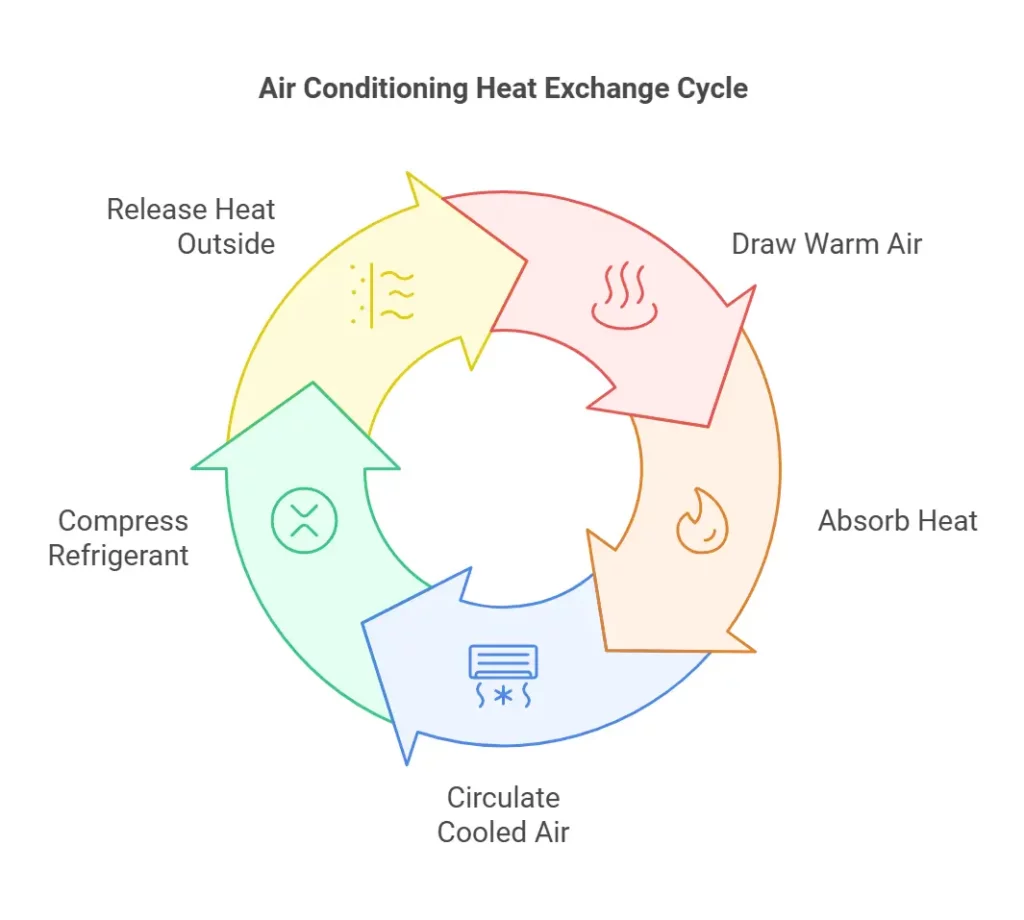
At its core, air conditioning works through a process called heat exchange, which essentially removes heat from inside your space and releases it outside. Heat exchange is enabled by a chemical refrigerant that moves through your air conditioning system, absorbing and releasing heat along the way.
Here’s how it works step-by-step:
- Warm air from your home or office is drawn into the unit by the fans.
- This warm air passes over evaporator coils, the refrigerant inside the coils absorbs the heat from the air and evaporates into a gas.
- The cooled air is circulated back into your living or working space through ducts or vents.
- The refrigerant, now in a hot gaseous state, is directed to the compressor in the outdoor unit, where it undergoes pressurization.
- The hot, pressurized refrigerant then travels to the condenser coil, where it releases the heat outside and then condenses back into a liquid.
By continuously repeating this cycle, the air conditioning system maintains a lower indoor temperature.
2. The Vital Components of an Air Conditioning System
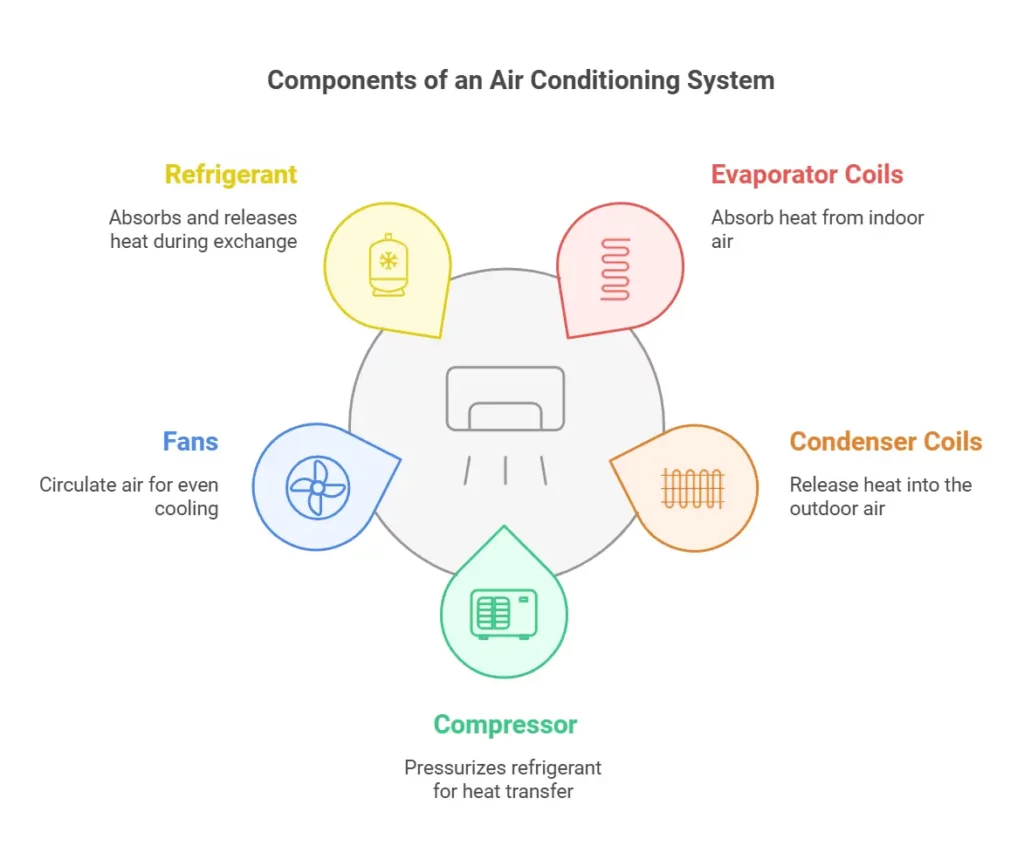
Air conditioners aren’t just a single device; they are composed of several essential components working together. Each one plays a unique role in the cooling process. Here’s a breakdown:
- Evaporator Coils – These coils absorb heat from the indoor air and they are located in the inside unit.
- Condenser Coils – Located outside, they release the absorbed heat into the air outdoors.
- Compressor – pressurizes the refrigerant so it can efficiently transfer heat.
- Fans – Circulate air through the coils and around your space, ensuring even cooling.
- Refrigerant – A specialized chemical known as refrigerant absorbs and releases heat during the process of heat exchange.
This system’s efficiency depends on proper maintenance of all its components. Regularly scheduled services ensure your air conditioning operates at peak performance.
3. The Science of Refrigerant and Its Role
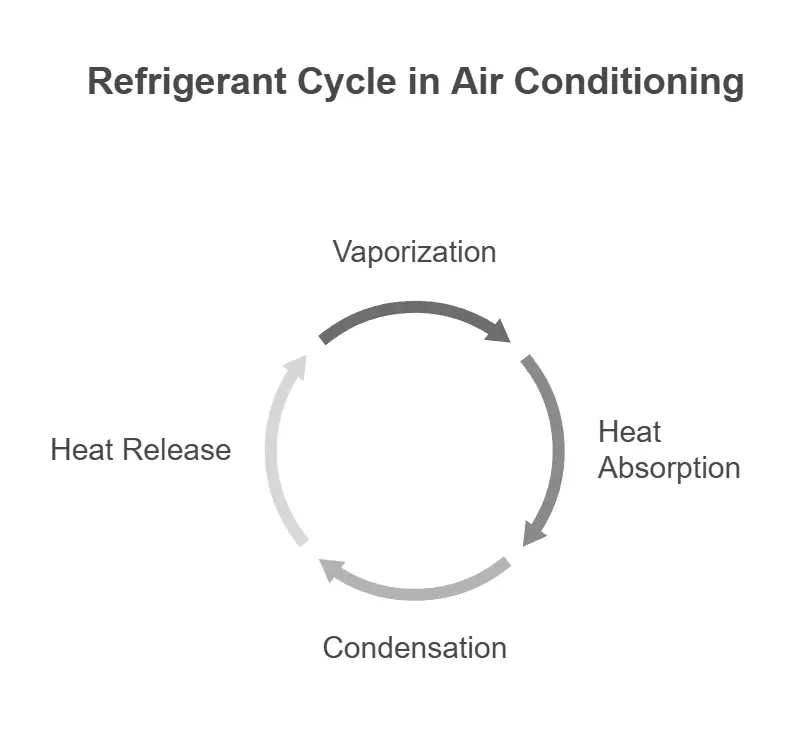
Refrigerants are the lifeblood of your air conditioning system and are key to its performance. They are designed to vaporize and condense as they move through the cooling cycle, absorbing heat during the vaporization stage and releasing it during condensation. Modern air conditioning systems use environmentally friendly refrigerants to minimize their environmental impact while maximizing efficiency.
4. How Your Thermostat Takes Control
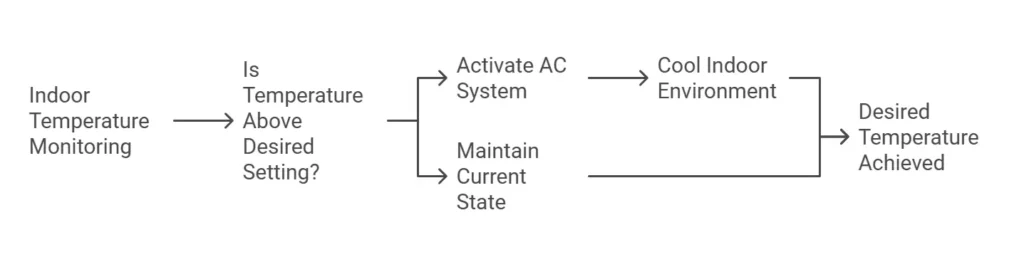
The thermostat regulates and maintains your desired indoor temperature by signaling the system to turn on or off. When the indoor temperature exceeds the desired setting, the thermostat triggers the AC to cool the area.
5. How Energy Efficiency Plays a Role
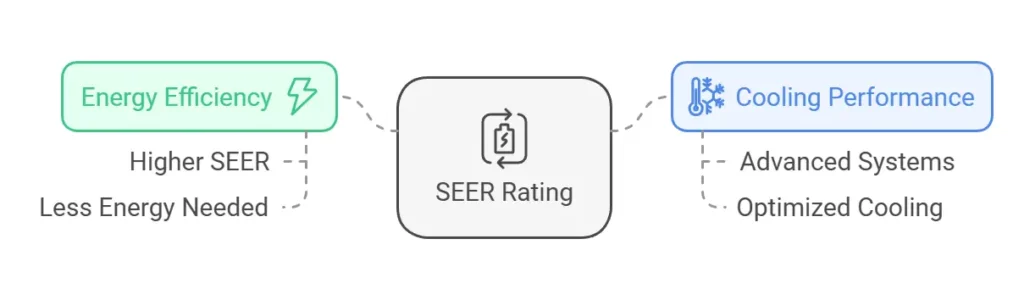
The SEER (Seasonal Energy Efficiency Ratio) rating is frequently used to indicate how energy-efficient air conditioning systems are. Less energy is needed to cool your space if your SEER is higher. Today’s advanced systems are designed to provide optimized cooling while reducing energy consumption.
6. Regular Maintenance Ensures Long-Term Performance
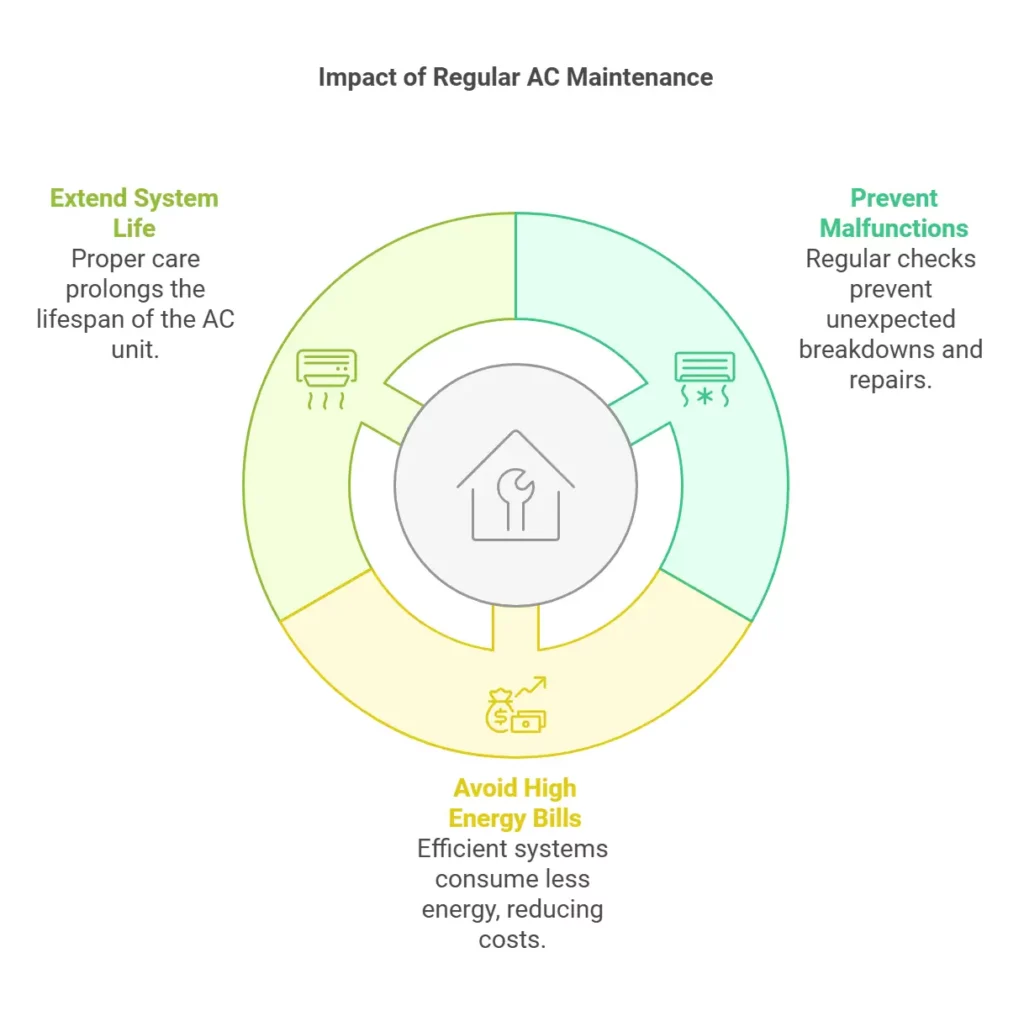
Air conditioning systems require consistent maintenance to prevent malfunctions and unnecessary repairs. Cleaning filters, checking refrigerant levels, and inspecting coils should all be part of a regular upkeep schedule. Neglecting maintenance can lead to reduced efficiency, higher energy bills, and shortened system life.
Hiring a professional technician at least once a year for a full system tune-up can ensure everything works smoothly. It’s a small investment for long-term reliability and comfort.
7. How Modern Technologies Are Changing Air Conditioning
With the development of smart technology, the air conditioning industry is changing quickly. Smart thermostats, for example, allow you to control your AC remotely, saving energy when you’re out and ensuring comfort when you return. Additionally, some systems now feature advanced air purification technologies, helping improve indoor air quality by filtering dust, allergens, and pollutants.
These innovations are making air conditioning systems smarter, more efficient, and more effective at delivering not just cooling but healthier air.
Maintain Comfort and Coolness with Air Conditioning
Understanding how air conditioning works not only gives you a deeper appreciation for your system, but it also helps you make better decisions about maintenance, upgrades, and usage. From efficient cooling to improved air quality, your AC system works tirelessly to keep your space comfortable.
If you need professional advice on maintaining or upgrading your air conditioning system, contact us today. We’ll ensure your system is perfectly suited to your needs, offering both efficiency and performance you can count on.